
Sunday, July 19, 2026
EIGHTH SUNDAY AFTER PENTECOST – Sermon for Trinity Episcopal Church in Baraboo, WI
LECTIONARY READINGS : Track 1 – Genesis 28:10-19a; Psalm 139:1-11, 22-23; Romans 8:12-25; Matthew 13:24-30, 36-43
Chapter 13 of Matthew’s gospel is 58 verses long and we’re in the middle of spending three Sundays speaking of seeds and sowing. Three whole Sundays. That alone invites our attention. And, since we live in an agricultural state, we might wonder, HOW MUCH can possibly said about seeds and sowing!?! Clearly, Jesus thought seeds and sowing were worth using to get his point across.
Jesus recognized that his audience might better understand the concepts he shared with them by using imagery they could connect with. Inviting them to take his instructions into their daily life in a way they’d remember, through stories instead of black-and-white details. Telling parables instead of a lecture or Ted-Talk to express God’s desire for us to grow into Kingdom living here and now by loving God, neighbor, and self…to feel God’s presence with us in our daily lives.
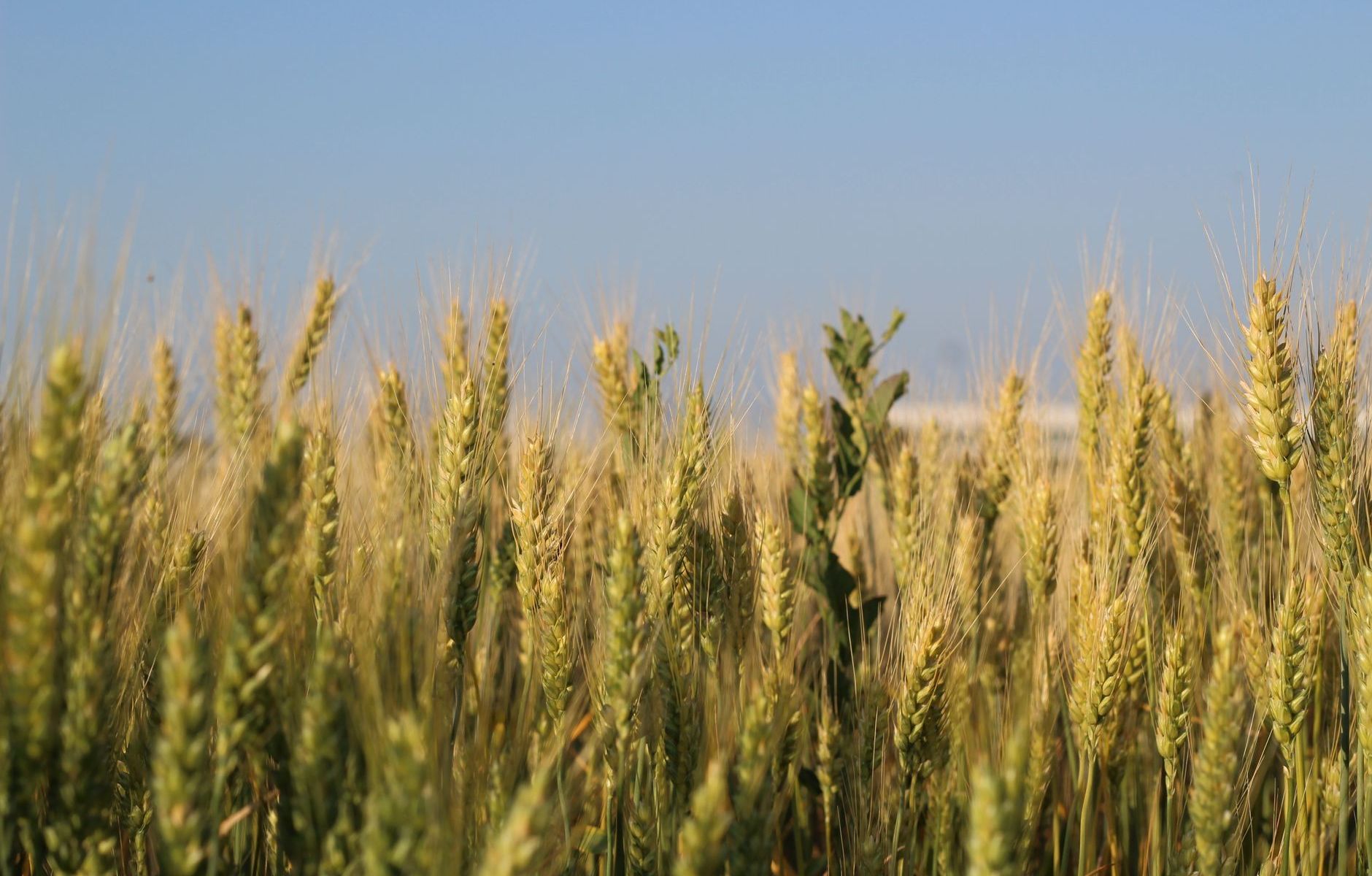
Jesus told the people and/or the disciples roughly 40 parables. This one, sometimes called the Parable of the Wheat and Weeds, until this past week, was my least favorite of the parables. Mostly because I’d only ever heard it preached as an example of “who’s in and who’s out.” The wheat being the “in crowd” and the weeds being the “out crowd.” And, when weeds get translated into people, it’s the angels who no less gather the weed people and throw them into the fires where there is “weeping and gnashing of teeth.” Matthew really likes the phrase “weeping and gnashing of teeth” and uses it five time. (Luke is the only other gospeler who uses the phrase, and then only once.) It is difficult for many of us to reconcile the idea of God who instructs to love to come across as vindictive, casting out people into eternal suffering.
This week though, I saw this parable in a new way. A way that I believe is more indicative of the teachings of Jesus and less about humanity’s obsession with who’s in and who’s out.
The problem is “evil.” Yes, I mean that in its double entendre way. Evil is all around us. We see examples of it each and every day. When we spend time wondering about why there is evil in the world, why bad things happen to good people, and then ask WHY God doesn’t do something about it, the question of evil itself becomes evil in a way that insidious and gets under our skins. Through the centuries, humanity has wrestled with the question of evil. Christianity does not have the corner on that market. Every religion has wrestled with it through the centuries. The 3000-year-old epic, Odysseus, arrived in the theaters this week to share a new translation, a new spin, on an age-old story of our struggle with the weeds of life. The story is old but made new in each generation.
Which is exactly why Jesus shared parables instead of lectures…so we could see God’s hopes and desires for us in the context of our own time. This week, I started to see that the parable of the wheat and weeds is not meant to make us happier in the knowledge that the weeds will get what’s coming to them, but, instead, that wheat is meant to live out its life growing, despite the weeds that happen to be in our path.
But I’m getting a bit ahead of myself. Let me share the story of what happened this week to change my mind and shed new light on the parable for our time.
On Monday, I received a SFH text from an unknown number. Someone named “Meghan” identified that she was traveling with students on a youth summer road trip with the Lutheran campus ministry from Univ of North Dakota. She wondered if SFH had showers they might use because the place they were planning to stay at had an issue with their showers. That’s all the info I had.
Through a series of texts and a google search for Lutheran ministries at UND, I discovered that this was a group of 48 in need of showers at 8:00 on Monday evening and that they were actually staying at the Lutheran Campus Ministry right next door to St Francis House and our 3 showers. Plans were made for me to meet them at 8.
I won’t go into all the details, but I’ll share that, not only did SFH provide showers, we also ended up housing 15 in our lower-level rec room. God in action.
Turns out this group of “wheat” had experienced one “weed” after another on their were back from South Carolina. A bus whose a/c went out on Sunday and wasn’t fully operational in the 90-degree heat while carrying 48 heat producing bodies. The church they stayed at on Sunday didn’t have any shower facilities and by Monday night, with one day left of travel, they were feeling ripe and tempers were wearing thin. All the growth that wheat had experienced in the week prior was feeling choked out by the weeds of two days of travel. Showers. Check.
Meghan was feeling good about caring for the growth until a weed landed in her path. The housing available at LCM was such that their numbers would not be where they should be for “safe church” protocols. A big weed attacking her.
I can’t begin to tell you what an amazing experience it was to watch God at work through St Francis House to ensure that the growth this group had experienced would not be lost. When I got home on Monday, I had this image of a field being flooded with God’s love…much like the cranberry fields are flooded for harvest.
No one could do anything about the heat. No one could do anything about the bus’s a/c unit going out (other than repair it). No one could do anything about churches who’d lovingly opened their doors for housing a team of 48 but couldn’t provide showers. All of those distraction were like weeds growing in their midst. One weed after another…causing them to get frustrated and to lose sight of the wonders they’d seen of God’s love. But, some water, a bit of ice cream, and an unexpected additional place to stay, helped restore them to seeing God’s love open to them. Enabling the growth to continue.
The experience with the group from North Dakota this week helped me see another meaning to Jesus’s parable of the Wheat and Weeds that was not about weeping and gnashing of teeth, but about making sure growth would continue. That God is in charge of the harvest. That God desires the wheat to grow.
Last week, the sower sowed seeds. Because that’s what the sower is to do. This week Jesus identifies himself as the Sower of this parable. And the Sower sows good seeds. When there are weeds that appear, we are meant to keep growing.
That sounds more like the God I’ve grown to know. God who took on our human nature. God who grew alongside us and in the midst of the weeds we experience in daily living. The problem of evil is that it wants to keep us from growing in God’s love. Love that died and rose again so that we might experience new life…in abundance. Life that experiences God’s presence here and now and in all places…God was in this place and I did not die…Jacob says after his vision of the ladder with all the angels. God is in all places.
Meghan texted me on Tuesday morning to say that she’d sat in the St Francis House chapel and cried tears of gratitude for all they’d experienced of God’s love in the week prior…and of all the places in which God was present and guiding them home.
May we go forth today with the knowledge of God’s love in all the places we find ourselves. There may be weeds, but God’s desire is for us to grow in love as Christ love us. Parables are God’s invitation seek and see God all around us despite the weeds and to know and share with others that God is in this place…with us. That all God’s children might grow.
Thanks be to God.

